
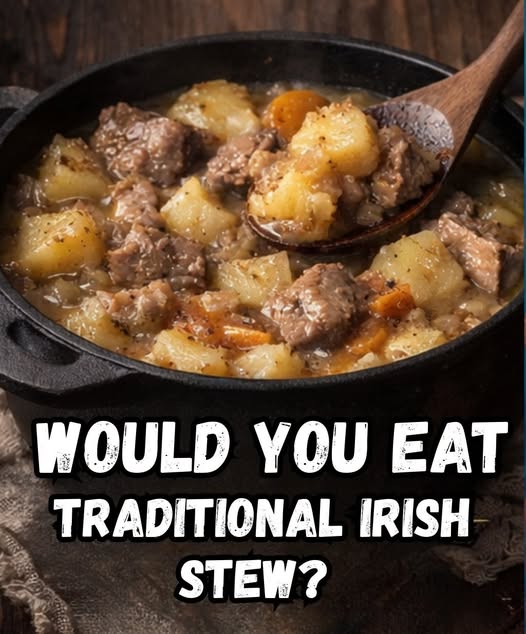
There are some dishes that don’t try to impress you. They don’t sparkle or shout. They don’t arrive with garnish or drama. They simply show up, warm and steady, and remind you that food was once about endurance, patience, and care.
Traditional Irish stew is one of those dishes.
It wasn’t born in restaurants or cookbooks. It came from stone cottages, from iron pots hung low over turf fires, from kitchens where nothing went to waste and everything had a purpose. This was a stew meant to last—to feed a family, to stretch ingredients, to warm cold hands and tired bones.
And if you grew up in an American-Irish household, you probably know the stew looked a little different than the one written about in history books. Lamb wasn’t always easy to find. Mutton was nearly unheard of. Beef—humble, affordable beef—often took its place. But the soul of the stew stayed the same.
No flour.
No roux.
No shortcuts.
Just potatoes doing the quiet work they’ve always done.
Old-Fashioned Irish Colcannon
The Old-Fashioned Winter Dessert That Melted Butter Into Memories
A Stew Built From Necessity, Not Recipes
Long before “comfort food” became a category, Irish stew was simply food. It was what people ate because it was what they had.
Ireland’s rocky soil favored potatoes over grains. Cattle and sheep were valuable, but older animals—especially sheep past their prime—were tough and needed long cooking. Irish stew emerged naturally from this reality: a pot of meat, potatoes, onions, water, and time.
That’s it.
There was no thickening agent because there was no need for one. Potatoes, especially older, starchier varieties, break down when simmered slowly. They cloud the broth, soften its edges, and turn plain water into something rich and spoon-coating.
That cloudy broth wasn’t a flaw—it was the goal.
Why There’s No Roux (And Never Was)
Modern recipes often try to “fix” Irish stew by adding flour, cornstarch, or even cream. But traditional Irish stew doesn’t need fixing.
The thickness comes naturally, the way it always did:
from potatoes breaking down, not flour being added.
Older cooks understood something we’ve forgotten—stew doesn’t need to be smooth or uniform. It needs to feel honest. Some potatoes melt away completely, becoming part of the broth. Others stay intact, soft but whole, giving you something to bite into.
The result is a stew that looks rustic and tastes deeply nourishing—like it earned its place on the table.
More you’ll love:
Fried Cornmeal Mush – A Golden, Butter-Fried Memory from America’s Simplest Kitchens
Salmon Loaf with Old-Fashioned Pea Gravy
Lamb, Mutton, and the American Beef Switch
Historically, Irish stew was made with lamb or mutton, especially tougher cuts that benefited from hours of simmering. Mutton, in particular, had a strong flavor that mellowed beautifully over time.
But when Irish families emigrated to America, ingredients changed.
Beef was cheaper.
Beef was familiar.
Beef was available.
So chuck roast, stew meat, or even beef shank found their way into the pot. And while purists may argue, American-Irish families weren’t trying to preserve culinary history—they were trying to feed their children.
And the stew still worked.
Because the heart of Irish stew isn’t the protein—it’s the process.
The Potatoes That Make or Break the Stew
If there is one rule in traditional Irish stew, it’s this:
Do not skimp on the potatoes.
They are not a side ingredient.
They are the thickener.
They are the body of the dish.
Older cooks often layered the pot: potatoes on the bottom, meat and onions above, more potatoes on top. As the stew simmered, the bottom layer softened first, dissolving into the liquid and creating that signature texture.
No measuring. No stirring constantly. Just trust.
Onions, Salt, and Restraint
Traditional Irish stew is restrained by design. It doesn’t rely on garlic, paprika, or spice blends. The flavor comes from slow cooking and the natural sweetness of onions and potatoes.
Salt and pepper were often added sparingly—sometimes only at the end—because meat and potatoes change flavor as they cook. What tasted bland at hour one could be perfectly seasoned by hour three.
Herbs, if used at all, were subtle. A sprig of thyme. A little parsley at the end. Never enough to distract from the stew itself.
The Long Simmer That Changes Everything
Irish stew isn’t rushed. It can’t be.
It simmers low and slow, often for hours, until the meat yields easily and the potatoes begin to surrender. The pot might be nudged, checked, but never fussed over.
And like so many old-world dishes, it’s even better the next day—when the broth thickens further and the flavors settle into one another.
This was practical cooking. Make a pot today. Eat tomorrow. And maybe the day after.
How It Was Served (And Still Should Be)
There was no garnish.
No fancy bowl.
No plating.
Just a deep ladle into a bowl and maybe a piece of bread on the side—soda bread if you had it, plain bread if you didn’t.
Irish stew didn’t need accompaniments. It was the meal.
Why This Stew Still Matters
In a world of shortcuts and speed, traditional Irish stew reminds us that some things can’t be rushed. That flavor comes from patience. That food doesn’t need to be flashy to be meaningful.
It’s the kind of meal you make when the weather turns cold, when life feels heavy, when you need something that asks nothing of you but time.
And maybe that’s why it’s lasted so long.
Traditional Irish Stew Recipe (Old-School Method)
Ingredients
2 pounds lamb, mutton, or beef stew meat
2½ pounds potatoes, peeled and chunked
2 large onions, sliced
Salt and black pepper
Water or light broth (just enough to cover)
Optional: thyme or parsley
Continued on the next page
ADVERTISEMENT
