
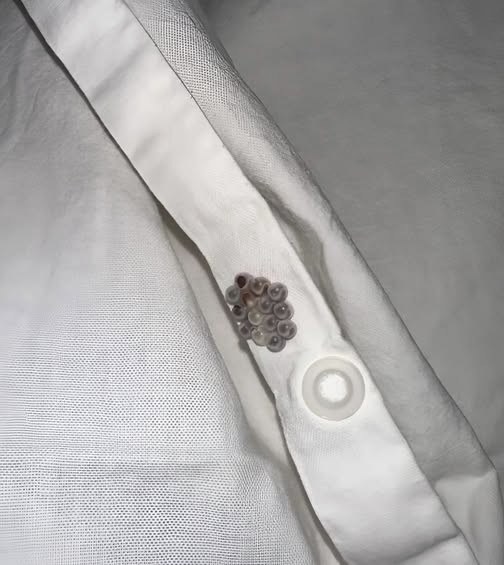
1. Lint or Fabric Pills
From cotton sheets, pajamas, or towels
Often roll into tiny balls due to static or movement
Especially common with older bedding
2. Dried Skin Flakes or Sebum
Natural skin shedding during sleep
Can clump with oils into small, waxy beads
Harmless and universal (we all do it!)
3. Residue from Laundry Detergent or Dryer Sheets
Undissolved detergent bits or fabric softener globs
Appear as white or translucent beads
Rinse better with vinegar or less detergent
4. Pilling from Memory Foam or Pillows:
Tiny foam beads escaping from mattress toppers or pillows
Usually white, squishy, and uniform
5. Pet Hair + Dust Clumps
If you share your bed with a dog or cat, their hair can trap dust and dander into small balls
Easily mistaken for “eggs” but completely benign
 When Should You Worry? (Rare but Possible)
True pest eggs in beds are almost always from one source:
→ Bed Bugs
Eggs: Pearly white, ~1mm long, sticky—they adhere to seams, crevices, or mattress tags, not loose on top of sheets.
Signs: Rust-colored stains, shed skins, musty odor, bites in rows.
Action: Inspect mattress seams with a flashlight. If suspected, contact a pest professional.
 Note: Bed bug eggs don’t just “scatter” loosely—they’re glued in hidden spots.
How to Investigate Calmly (No Doctor Needed!)
Collect a sample: Use tape or a spoon—don’t crush it.
Examine closely: Use a magnifying glass or phone macro lens.
Smooth, hard, white? → Likely lint or detergent.
Soft, waxy, yellowish? → Skin/sebum.
Clustered and stuck to fabric? → Consider bed bugs (but still unlikely).
Check your laundry routine: Are you using too much detergent? Is your washer overloaded?
Inspect bedding: Look for pilling, fraying, or foam leakage.
ADVERTISEMENT
