
3. Browning: A Key Phase
Properly sealing the meat is essential to lock in the juices. In a large saucepan:
Heat a drizzle of olive oil with a knob of butter.
Brown the roast on all sides over medium-high heat until evenly golden.
Avoid piercing the meat—use tongs or a wooden spoon instead.
4. Slow and Controlled Cooking
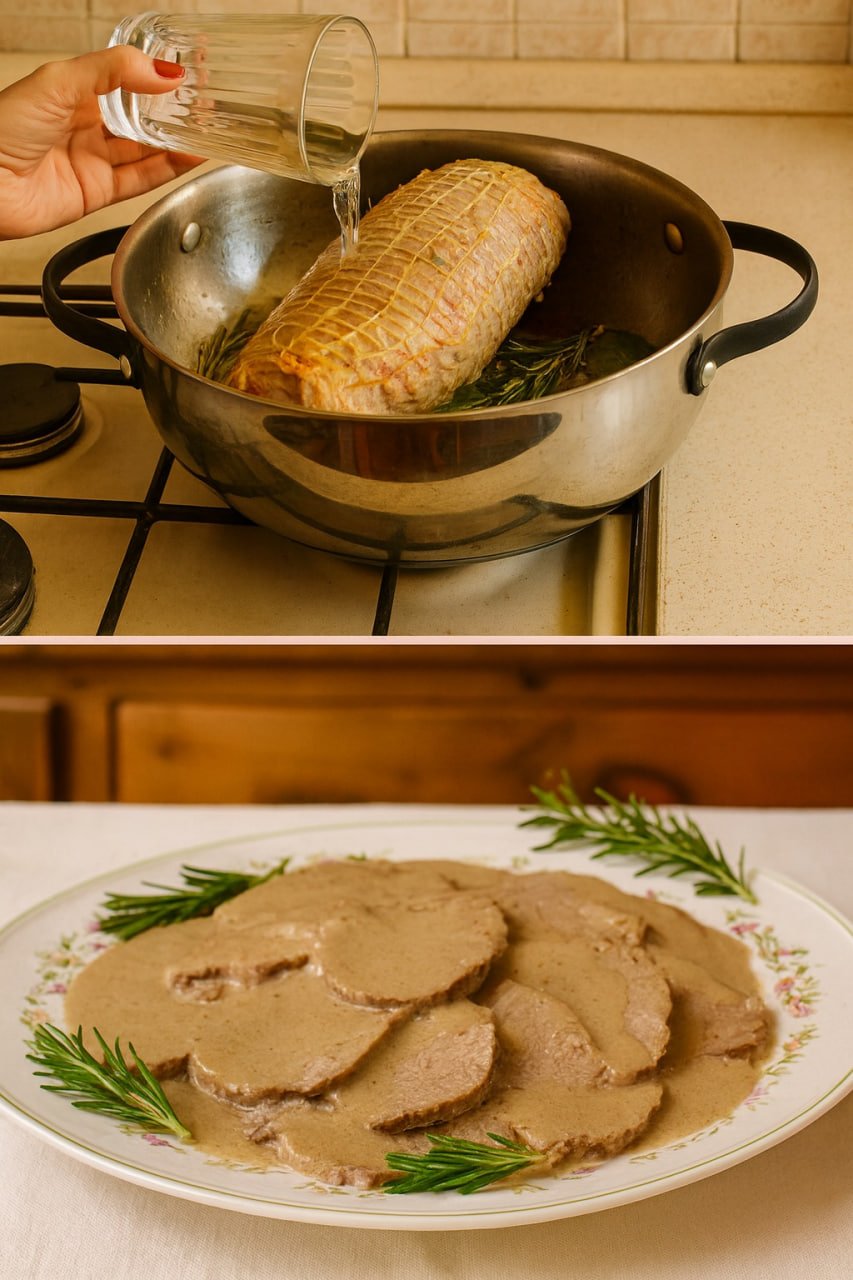
Once browned, it’s time for gentle cooking. The key to avoiding stringy meat is minimal liquid with constant moisture.
Add:
One glass of hot vegetable broth or water
A splash of white wine (allow it to evaporate completely)
Aromatics such as onion, celery, and carrot
Cover with a lid and cook over low heat for 1 to 1½ hours, turning occasionally and basting with the cooking juices.
Alternatively, transfer to a covered oven-safe dish and cook at 160°C (320°F) for about one hour.
5. Resting: A Step You Can’t Skip
Once cooked, do not slice the roast immediately. Let it rest for 10–15 minutes, loosely wrapped in aluminum foil. This allows the juices to redistribute and keeps the meat tender.
6. The Perfect Sauce
Blend the vegetables with a spoonful of the cooking juices to create a smooth, delicate sauce to serve over the roast.
If desired, thicken it slightly with a teaspoon of sifted flour or finish with a small knob of butter for extra richness.
Extra Tip: How to Slice It
Use a very sharp knife and cut the roast into thin slices, preferably on a slight diagonal. This enhances tenderness and improves mouthfeel.
ADVERTISEMENT
