
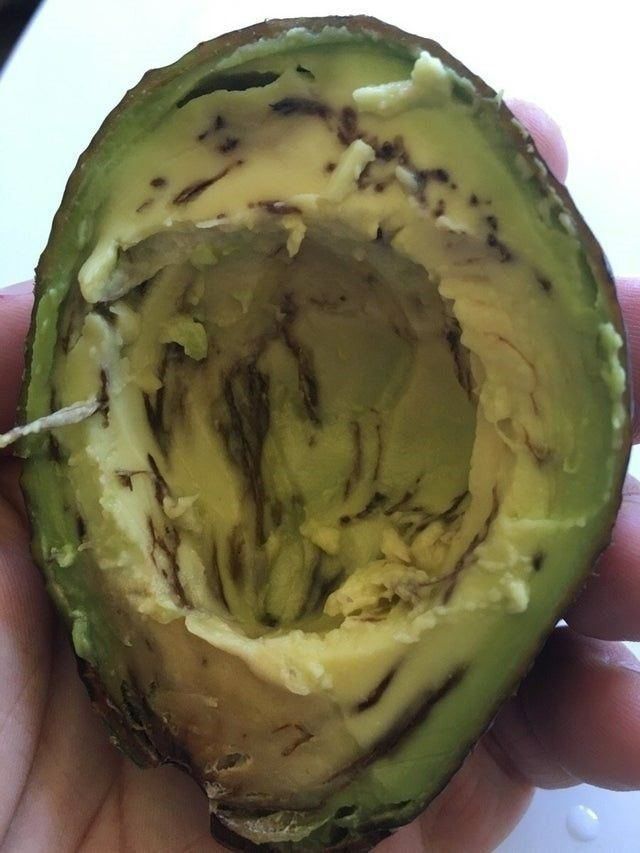
Underripe? → Place in a paper bag with a banana or apple to speed ripening (1–3 days).
Overripe but not spoiled? → Make chocolate avocado mousse, smoothies, or vegan brownies—no one will know!
Browned top layer? → Scrape it off; the green underneath is fine. Drizzle with lemon juice to prevent further browning.
Too soft for slicing? → Whip into avocado dressing or creamy pasta sauce.
❄️ How to Store Avocados (Correctly!)
🥑 Unripe Avocados
Store at room temperature, away from direct sun.
Never refrigerate—cold halts ripening permanently.
🥑 Ripe Avocados
Eat within 1–2 days, or store whole in the fridge to pause ripening for 3–5 more days.
🥑 Cut Avocados
Leave the pit in, rub exposed flesh with lemon or lime juice, press plastic wrap directly onto the surface, and refrigerate. Keeps 1–2 days.
Bonus: Store cut avocado face-down in a bowl of water—some swear by this for 2–3 days of freshness (though USDA recommends against it due to bacteria risk—use within 24 hours if trying).
🌱 Why Avocado Waste Hurts More Than Your Wallet
Avocados have a high environmental footprint (water-intensive, often shipped long distances).
The average U.S. household wastes 8–10 avocados per year—that’s $80+ and 200+ gallons of water down the drain.
By learning to read your avocado, you’re not just saving money—you’re voting for sustainability with every fruit you rescue.
Final Thought: Trust Your Senses—Not Just Looks
An avocado doesn’t have to be perfectly green and firm to be good. Some of the best guacamole comes from slightly soft, speckled fruit!
So next time you’re unsure, do the stem test, take a sniff, and give it a taste. Your gut—and your grocery budget—will thank you.
ADVERTISEMENT
