
4. How Added Water And Processing Change The Look Of Bacon
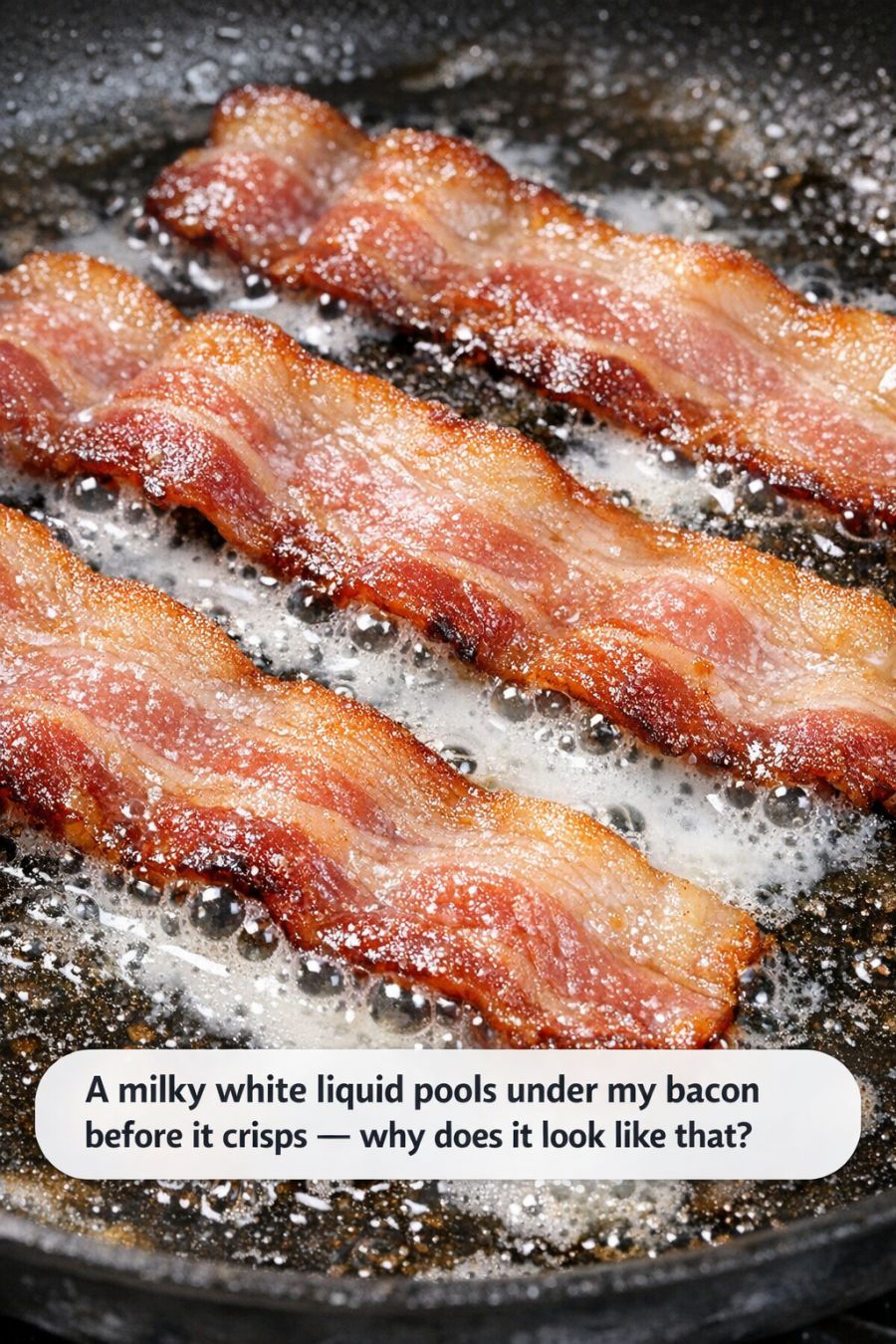
Bacon processing can affect how much white liquid forms during cooking. Some manufacturers inject water or brine into the bacon to enhance flavor or increase weight, which can lead to more water being present when cooking. The additional water, when combined with proteins and fat, can increase the amount and visibility of the milky liquid.
5. The Role Of Proteins: Albumin, Myosin, And That White Film
Albumin and myosin are two proteins that play a significant role in the formation of the white liquid. Albumin is a water-soluble protein that becomes more apparent when it coagulates under heat. Myosin, a muscle protein, also contributes to the formation of the film. Both proteins are naturally present in meat and react to heat by binding with water and fat.
6. Why Some Bacon Brands Ooze More White Liquid Than Others
The amount of white liquid produced can vary between different brands of bacon. Factors such as the curing process, added water, and the quality of the meat all play a role. Bacon with more added water or lower quality meat may produce more liquid than higher quality, dry-cured bacon.
7. Pan Temperature: How Heat Can Make The White Goo Worse
Cooking bacon at too high of a temperature can exacerbate the formation of the white liquid. High heat causes the proteins and water to separate more rapidly, leading to more coagulation and visible liquid. Cooking bacon slowly over medium heat can help minimize this effect, allowing the bacon to crisp without excessive liquid formation.
8. Cooking Tricks To Minimize The White Pooling
To reduce the amount of white liquid, consider starting bacon in a cold pan and gradually increasing the heat. This allows the fat to render slowly, reducing the chance of rapid coagulation of proteins. Additionally, choosing bacon with less added water or opting for dry-cured varieties can help minimize liquid pooling.
9. What The Milky Liquid Reveals About Bacon Quality
The presence and amount of milky liquid can be an indicator of bacon quality. High-quality bacon tends to have less added water and thus produces less liquid. If the liquid is excessive and accompanied by an unpleasant odor, it may suggest lower quality meat or poor storage conditions.
10. When To Worry: Off Smells, Colors, And Other Red Flags
While the white liquid itself is not a cause for concern, it is important to be aware of other signs of spoilage. Bacon that has an off smell, unusual color, or slimy texture should be discarded. These signs may indicate bacterial growth or other spoilage issues that could pose a health risk.
11. How To Shop For Bacon That Sizzles Instead Of Weeps
When selecting bacon, look for products with minimal added water and a good balance of meat and fat. Dry-cured bacon often has less moisture and a more intense flavor. Checking the ingredient list for unnecessary additives and opting for reputable brands can also help ensure a better cooking experience with less white liquid.
ADVERTISEMENT
