
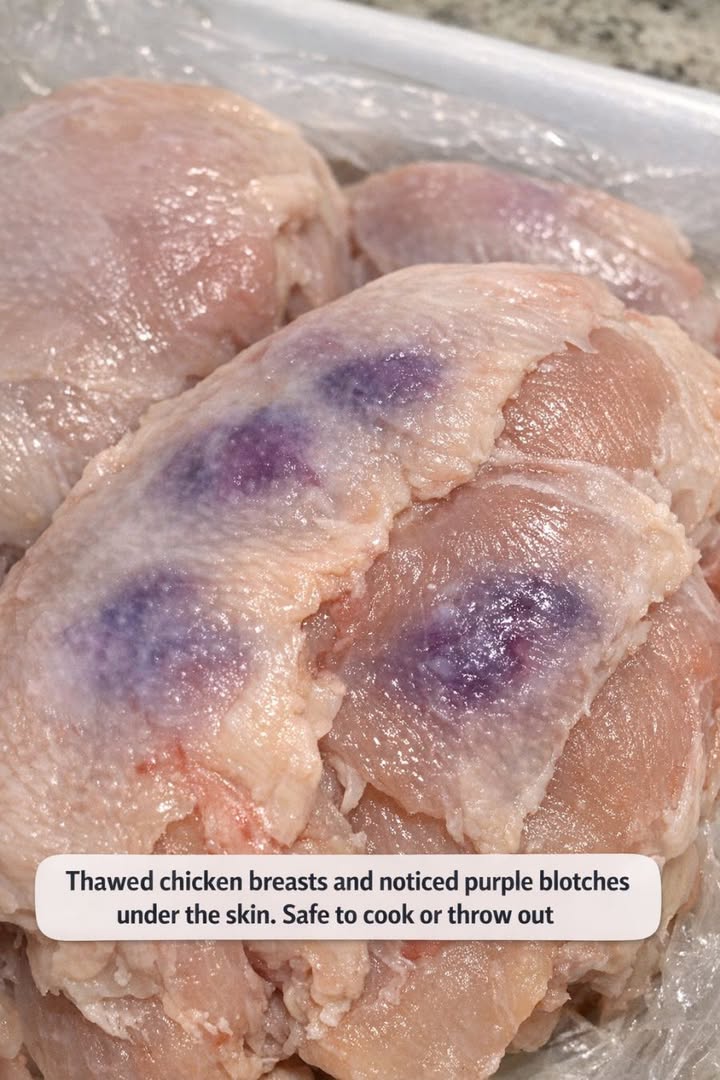
There’s a moment of unease that many home cooks experience when they open a package of chicken breasts only to discover an unexpected discoloration beneath the skin. This scenario becomes even more perplexing when the chicken was previously frozen and has been thawed, revealing purple blotches that weren’t visible before. The question then arises: Is this chicken still safe to cook, or should it be discarded immediately?
Understanding the safety of your food is crucial, especially when it comes to poultry, which is often associated with foodborne illnesses if not handled properly. This article delves into the causes of these purple blotches on chicken, offering guidance on whether they pose a health risk or are simply a benign change that occurs due to certain conditions. By the end, you’ll have a clearer understanding of how to handle discolored chicken, ensuring that your meals are both safe and delicious.
1. What Those Purple Blotches on Thawed Chicken Really Are
Upon thawing chicken, you might notice purple or dark blotches under the skin. These discolorations can be alarming but are not always indicative of spoilage or safety concerns. The purple hue is primarily due to the presence of myoglobin, a protein in muscle tissue that stores oxygen. When chicken is frozen and thawed, the process can cause changes in the appearance of myoglobin, leading to color variations. This is similar to how beef changes color from bright red to brown over time.
It’s important to note that the intensity of the color can vary based on factors such as the age of the chicken, its diet, and the specific muscle group. Thighs, for example, are more likely to exhibit darker colors than breasts due to their higher myoglobin content. However, these changes don’t necessarily mean the chicken is unsafe to eat.
2. Bone Marrow Leakage: The Common Culprit Behind the Discoloration
One of the most common reasons for purple blotches on chicken is bone marrow leakage. During the freezing process, ice crystals can form and puncture cells, causing the marrow to seep out and stain surrounding tissues. This is especially common in younger chickens, whose bones are more porous.
As the chicken thaws, the blood pigment from the marrow can spread, creating a purplish or reddish tint on the meat. While this can be visually unappealing, it is generally harmless and does not affect the safety or taste of the chicken, provided that it has been stored and handled correctly.
3. How to Tell Normal Purple Patches From True Spoilage
see next page
ADVERTISEMENT
