
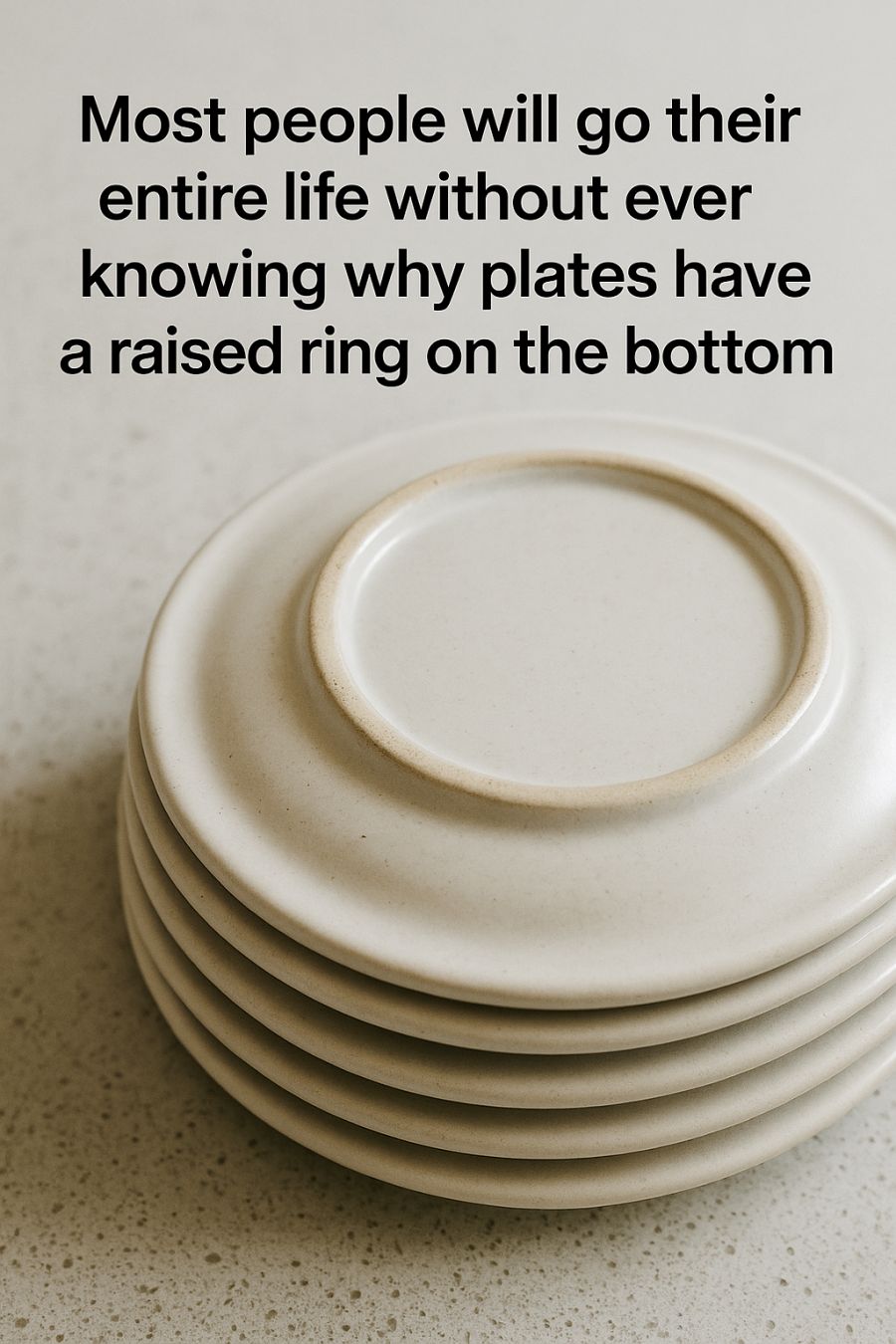
In the world of everyday objects, few items are as ubiquitous and overlooked as the humble dinner plate. Most of us use plates daily, yet few pause to consider the subtle engineering that goes into their design. Among the most intriguing features of a standard plate is the raised ring on its underside. This small but significant detail is so commonplace that it often goes unnoticed, yet it plays a crucial role in the plate’s functionality.
For most people, the raised ring is simply an unremarkable part of the plate’s design. However, this unassuming feature has been carefully crafted to enhance the plate’s utility in several ways. From preventing heat damage to ensuring stability, the raised ring is a testament to the blend of art and science that goes into creating dinnerware. This article will explore the various purposes served by the raised ring on plates and why it remains a staple in dinnerware design.
1. The Hidden Engineering Behind Everyday Dinnerware
The raised ring on the bottom of a plate, often referred to as the ‘foot’ or ‘foot ring,’ is a marvel of simple yet effective engineering. This feature is typically about 1-1.5 centimeters in height and runs along the circumference of the base of the plate, creating a small hollow area when the plate is placed on a flat surface. The foot ring is not merely decorative; its design is rooted in practicality and physics.
By elevating the base of the plate, the foot ring allows for a reduced contact area between the plate and the table surface. This aspect is crucial in distributing weight evenly and providing stability. Moreover, the ring’s height and diameter are meticulously measured to ensure the plate remains stable while also allowing for efficient stacking, an essential feature in both home and commercial settings.
2. How the Raised Ring Prevents Plates From Cracking Under Heat
One of the primary functions of the raised ring is to prevent thermal shock and heat-related damage. When a hot meal is placed on a plate, the temperature of the plate can rise significantly. If the entire base of the plate were in contact with a cooler surface, it could lead to uneven heating and potential cracking.
The foot ring minimizes direct contact with the table, allowing air to circulate beneath the plate. This design helps to dissipate heat more evenly across the plate, reducing the risk of thermal stress cracks. The foot ring thus acts as a buffer zone, maintaining the integrity of the material even when exposed to high temperatures.
3. Keeping Your Table Safe: Why the Ring Lifts Hot Surfaces Off the Table
see next page
ADVERTISEMENT
