
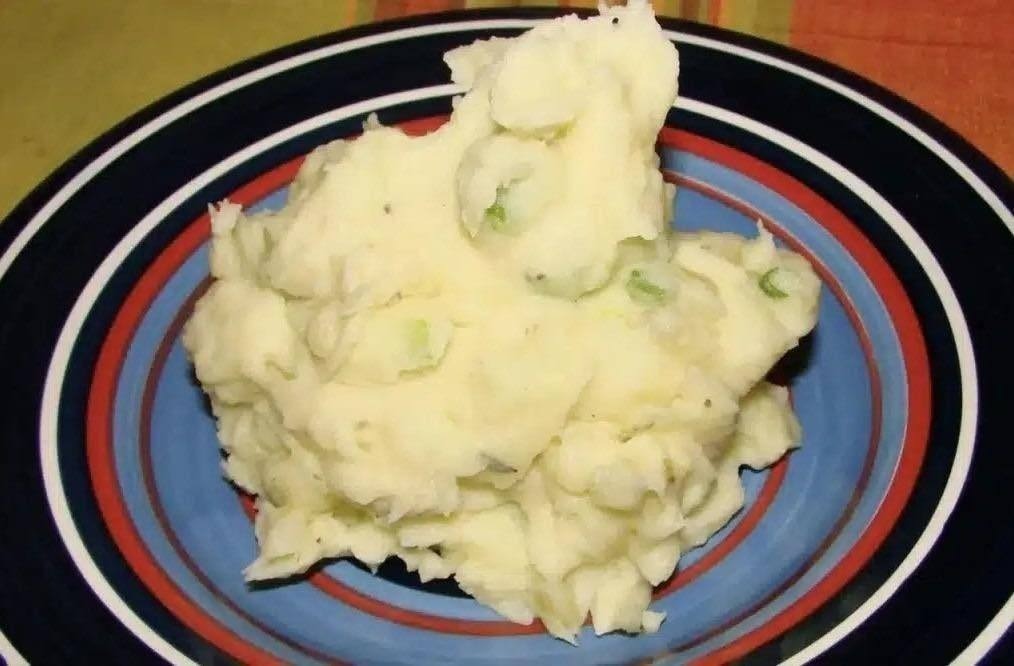
You love mashed potatoes.
But have you ever made them… and tasted them… and thought:
“Why are they so bland? So gluey? So… wet?”
Here’s the hard truth:
👉 Boiling your potatoes in plain water is the #1 reason your mash falls flat.
It leaches out flavor, absorbs too much liquid, and breaks down starches until they turn gummy.
But what if you could make ultra-creamy, rich, restaurant-quality mashed potatoes—without fancy tools or rare ingredients?
The secret isn’t more butter (though we’re not against that).
It’s how you cook the potatoes from the very beginning.
Let’s break the rules, ditch the tap water, and discover the real way to next-level mashed potatoes. ✨💛
🚫 Why Boiling in Water Ruins Your Mash
We’ve all done it: peel, cube, boil in salted water, drain, mash.
But here’s what actually happens:
Problem
What Goes Wrong
❌ Flavor Loss
Potatoes absorb water like a sponge—diluting their natural earthy taste
❌ Watery Texture
Wet potatoes = watery mash = sad, loose results
❌ Gluey Consistency
Overcooked, broken-down starch turns sticky when over-mashed
❌ Flat Seasoning
Salt only penetrates the surface—not deep inside
In short:
Plain water cooking = bland, soggy, and structurally unsound spuds.
🔬 Science Note: Potatoes are porous. When boiled in water, they swell with moisture—and once drained, that excess water can’t be fully removed.
✅ The Better Way: Cook Potatoes in Flavorful Liquid
Instead of water, simmer your potato chunks in broth, milk, or cream—infused with butter and aromatics.
This simple switch transforms your mash by:
✅ Infusing flavor from the inside out
✅ Reducing water absorption (milk/cream limits how much liquid enters)
✅ Creating naturally creamy texture (less dairy needed at the end)
✅ Preventing sogginess (you control the moisture)
Think of it as “steeping” your potatoes like tea—only better.
🛒 Ingredients:
see next page
ADVERTISEMENT
