
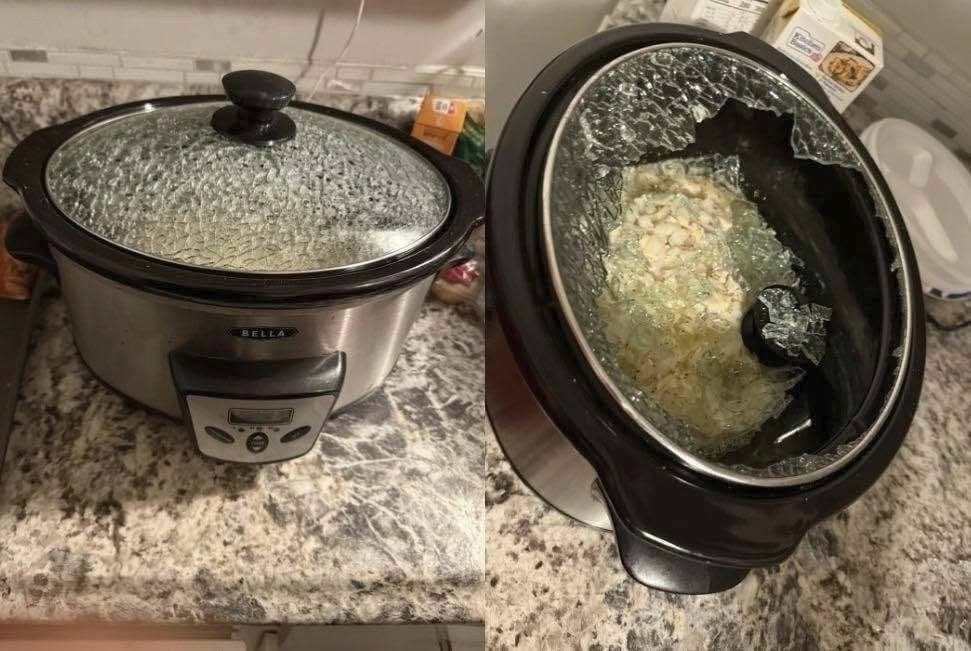
8. Breaded or Fried Foods
That crispy coating won’t survive.
What happens: The breading absorbs moisture and becomes a soggy, gluey mess. Fried chicken, breaded fish, and crispy eggplant lose everything that made them good.
The fix: Add fried or breaded toppings at the very end. Or serve them on the side. Or use your slow cooker for the filling and serve it separately over crispy items (like breaded chicken on top of rice).
9. Lean Meats (Without Enough Fat)
Not all meats are slow cooker-friendly.
What happens: Lean meats (pork tenderloin, venison, rabbit) have little fat or connective tissue. Long, slow cooking dries them out and makes them tough.
The fix: Use tougher, fattier cuts for slow cooking: chuck roast, pork shoulder, lamb shanks, chicken thighs. Save the lean cuts for quick cooking (grilling, pan-searing, roasting).
The science: Low, slow heat breaks down collagen (connective tissue) into gelatin, making tough cuts tender. Lean cuts don’t have that collagen—they just get dry.
10. Alcohol (Without Pre-Cooking)
Adding wine, beer, or spirits directly to a slow cooker sounds easy. But there’s a problem.
What happens: Alcohol doesn’t cook off in a slow cooker. The low temperature and closed lid trap the alcohol instead of evaporating it. Your dish will taste harsh and boozy, not rich and complex.
The fix: Simmer alcohol on the stovetop first (5-10 minutes) to cook off the raw alcohol. Then add it to the slow cooker. This concentrates the flavor without the harshness.
Pro tip: Deglaze your pan with wine or broth after searing meat, then pour that into the slow cooker. Best of both worlds.
11. Fresh Herbs (Added Too Early)
Parsley, cilantro, basil, dill—these delicate herbs lose their magic in a slow cooker.
What happens: Fresh herbs turn bitter, brown, and slimy. Their volatile oils evaporate or break down, leaving behind a dull, muddy flavor.
The fix: Add fresh herbs at the very end, just before serving. Or use dried herbs (oregano, thyme, rosemary) during cooking—they can handle the heat.
Pro tip: Make a “bouquet garni” (tie hearty herbs like rosemary and thyme into a bundle with twine). Remove before serving. Add fresh parsley, basil, or cilantro at the table.
Bonus: What About Frozen Foods?
Frozen meat, poultry, and vegetables should not go directly into a slow cooker.
The safety issue: Frozen foods keep the slow cooker’s temperature too low for too long. Your food sits in the “danger zone” (40-140°F) where bacteria multiply rapidly.
The fix: Thaw frozen foods in the refrigerator before adding to the slow cooker. For vegetables, you can add them frozen—just add extra cooking time.
Smart Swaps: What Actually Works in a Slow Cooker
Now that I’ve told you what NOT to use, here’s what thrives.
Proteins:
Chicken thighs (bone-in, skin-on for best flavor)
Beef chuck roast
Pork shoulder (pulled pork)
Lamb shanks
Sausages (Italian, bratwurst, kielbasa)
Vegetables:
Carrots
Potatoes (Russet, Yukon Gold, sweet potatoes)
Onions
Celery
Parsnips
Butternut squash
Legumes:
Dried beans (soaked overnight)
Lentils (red lentils break down; brown and green hold shape)
Liquids:
Broth (chicken, beef, vegetable)
Canned tomatoes
Coconut milk
Tomato sauce
Slow Cooker Safety Tips (Don’t Skip These)
Before you walk away for 8 hours, follow these rules.
1. Thaw frozen ingredients. As mentioned above, frozen meat is a food safety risk.
2. Don’t overfill. Fill your slow cooker ½ to ¾ full. Too little food cooks too fast; too much food doesn’t cook evenly.
3. Brown meat first. You don’t have to, but you should. Searing creates flavor (Maillard reaction) that the slow cooker can’t replicate.
4. Keep the lid on. Every time you lift the lid, you lose heat and add 20-30 minutes of cooking time. Resist the urge to peek.
5. Don’t reheat leftovers in a slow cooker. It takes too long to reach safe temperatures. Reheat on stovetop or microwave.
6. Use an instant-read thermometer. Don’t guess. Ensure food has reached safe internal temperatures (165°F for poultry, 145°F for pork, 160°F for ground meat).
Frequently Asked Questions
Can I put raw beef in a slow cooker without searing?
Yes, but it won’t be as flavorful. Searing creates a brown crust that adds depth. If you’re short on time, skip it—but your dish will taste “boiled” instead of “roasted.”
ADVERTISEMENT

